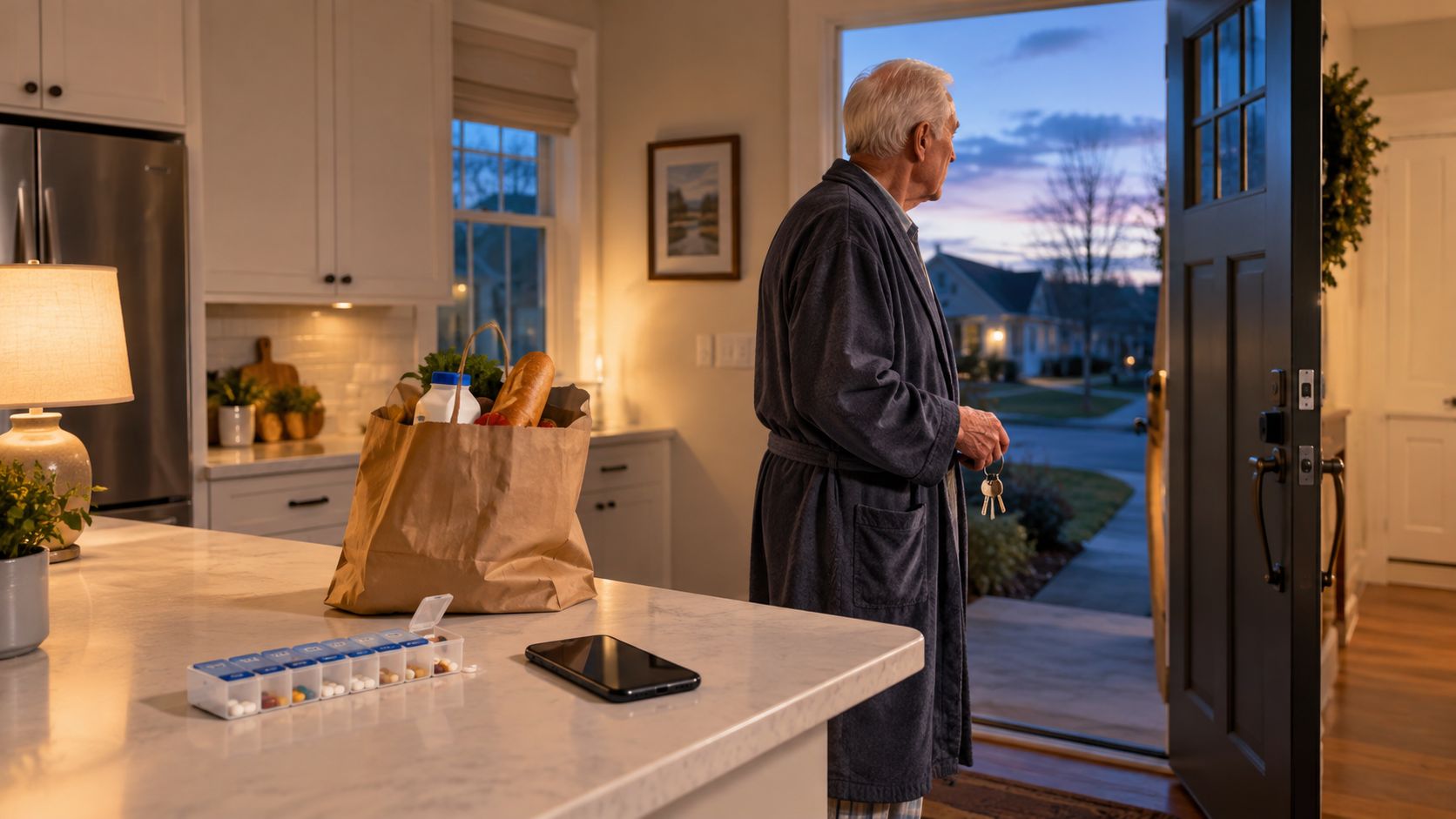
A parent leaves the front door at dawn, keys in hand, convinced they're going to work. Another family discovers that dinner medications haven't been taken for several days. A spouse who once managed the household now becomes frightened and agitated every evening. These moments rarely arrive with a clear announcement. They accumulate until the family realizes that love, reminders, and occasional help can no longer provide enough protection.
Memory care services are designed for that point of transition. They combine housing, supervision, dementia-capable staffing, medication support, safety measures, and structured activities in an environment built around cognitive decline. Choosing them isn't an admission that your family failed. It's a practical response to a progressive condition, and often the safest way to preserve dignity for the person receiving care and stability for everyone around them.
When Home Care Is No Longer Safe
A son starts sleeping with his phone on loud because his mother has begun opening the front door before sunrise. A daughter rearranges her workday to handle meals, medications, and evening confusion. Families across New Jersey do this every day. They keep patching the schedule because a move feels like too much, even when the risks are already clear.
That instinct is understandable. Home remains the setting for about 80% of adults with Alzheimer's disease and related dementias, according to the Centers for Disease Control and Prevention's caregiving overview. But placement decisions should turn on safety, not sentiment. If no one can reliably monitor exits, medication use, food intake, nighttime wakefulness, and sudden behavior changes, home care has stopped being enough.
The signs families shouldn't dismiss
Look past simple forgetfulness. In placement work, the families who wait too long usually describe the same pattern. They normalized problems that were already telling them the current setup could not hold.
- Wanders or gets lost: Leaving the house unsafely, especially at night, is not a minor memory issue. It means supervision has become a full-time need.
- Misses or repeats medications: A phone reminder is not the same as watching the medication get taken correctly.
- Becomes distressed after dark: Evening agitation, reversal of sleep patterns, and fear can wear down the entire household fast.
- Needs help with personal care: Bathing, dressing, toileting, eating, and mobility often shift from cueing to hands-on assistance.
- Leaves the caregiver depleted: Caregiver exhaustion changes the safety picture. It leads to missed steps, delayed responses, and burnout.
More than 11 million U.S. Adults provide unpaid dementia care, and they supplied about 18.4 billion hours of assistance in 2023. Families should read those numbers as a warning about load, not as a reason to keep stretching an unsafe arrangement. Long-term caregiving also often falls to older adults and continues for years, which is exactly why families need to reassess before a crisis forces the decision.
Practical rule: If daily life depends on constant surveillance to prevent a predictable problem, the person needs a more structured care setting.
Families comparing memory care with assisted living at home should audit the coverage, hour by hour. Who handles the overnight hours? Who notices missed meds? Who steps in when one bad evening turns into three bad nights in a row? Marketing promises and good intentions do not close those gaps. Reliable care does.
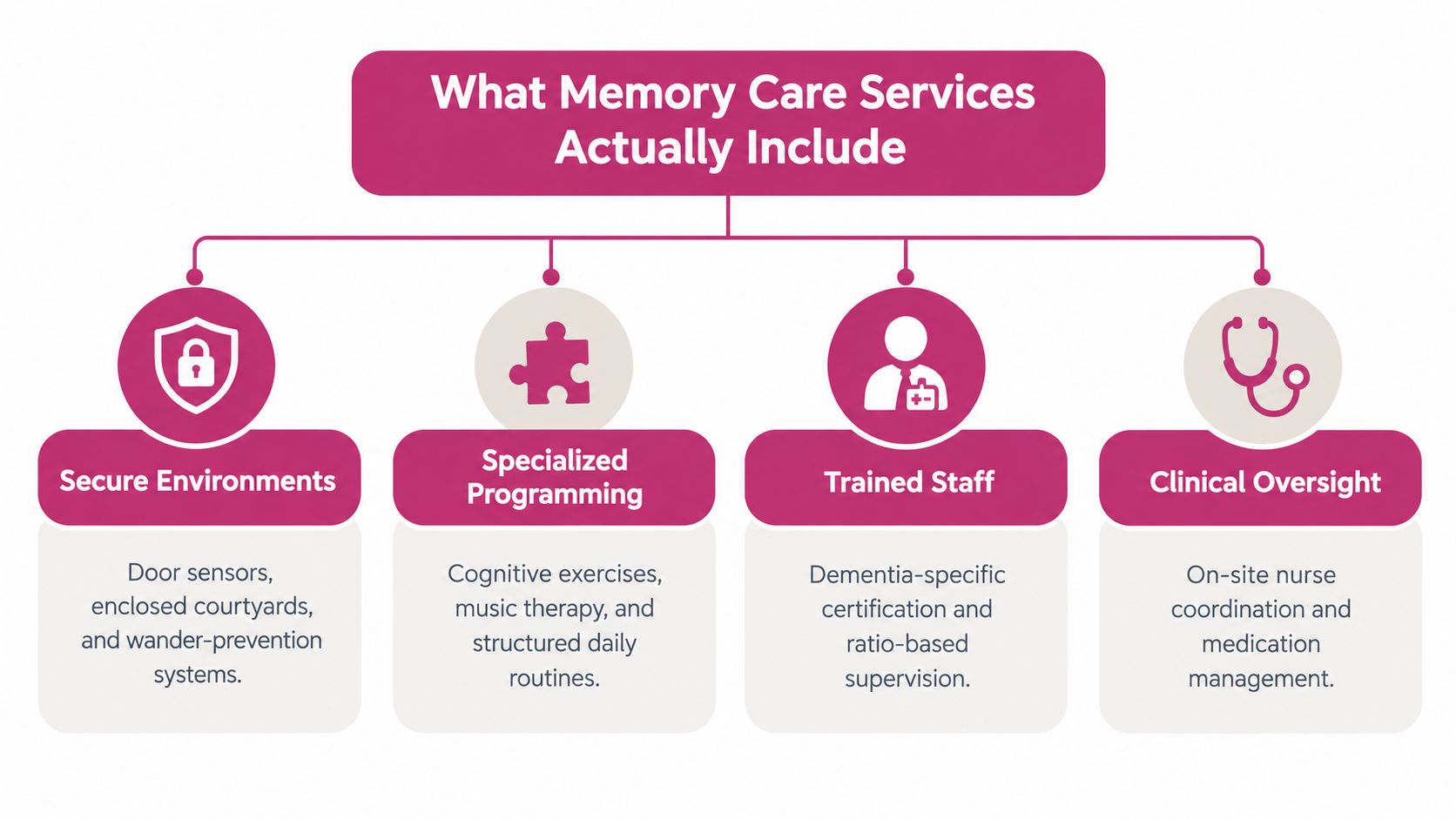
What Memory Care Services Actually Include
A strong memory care community functions like a purpose-built container. The layout, staffing model, schedule, and care procedures work together to reduce avoidable confusion while allowing residents to move and participate as independently as possible.
Security without institutional feel
Secure exits, monitored doors, enclosed outdoor areas, and clear sightlines help reduce wandering risk. Ask how the community handles a resident who repeatedly approaches an exit, whether staff can identify changes in walking patterns, and what happens during an emergency. A secured environment should still feel calm, navigable, and residential.
The best layouts support orientation through familiar visual cues, consistent room locations, good lighting, and uncluttered paths. During a tour, don't only inspect the lobby. Walk the corridors, look at the bathrooms, check the outdoor space, and notice whether residents can move freely within safe boundaries.
Routines that lower cognitive demands
Predictability matters because residents shouldn't have to solve the same practical problems repeatedly. Meals, rest, personal care, social time, and activities should follow a recognizable rhythm, while staff adapt when a resident needs a slower pace or a quieter setting.
Programming should go beyond filling the calendar. Ask whether activities reflect residents' abilities and histories. Music, reminiscence, movement, sensory engagement, and simple household tasks can all create meaningful participation when staff present them at the right level.
Staff support throughout the day
Memory care services typically include help with bathing, dressing, grooming, meals, mobility, and continence, alongside supervision and redirection. Clarify who assists with each task, how needs are documented, and what happens when a resident's needs increase.
Medication management deserves specific questions. Find out who administers medications, how missed doses are handled, how changes from physicians are recorded, and whether the community coordinates with pharmacies and outside providers.
Clinical coordination
A community may not be a medical facility, but it should have a clear process for health monitoring, urgent changes, falls, behavioral shifts, and communication with clinicians. Ask how nurses, aides, physicians, therapists, and families share information.
A useful tour question is: “What would make you call the family today?” The answer reveals more about communication culture than a brochure does.
A memory care program should be judged by what staff do during an ordinary difficult moment, not by how polished the tour feels.
Watch this overview for additional context before you visit communities:
Staffing and Training That Make the Difference
A community can have attractive rooms and a thoughtful activity calendar, yet still struggle if direct-care staff lack practical dementia skills. Families should separate baseline licensing training from demonstrated competency. The first may satisfy a requirement. The second shows whether staff can respond effectively when a resident refuses care, becomes frightened, or tries to leave.
Three layers to evaluate
Initial education gives staff a foundation in dementia, communication, personal care, and safety. Ask whether training covers the different ways cognitive impairment affects language, judgment, behavior, and daily routines. Staff should know how to offer choices, redirect without confrontation, and preserve dignity during intimate care.
Ongoing development is where many communities differ. A systematic review of 19 randomized controlled trials involving 3,947 participants across eight countries found that dementia-care education consistently improved staff knowledge, but effects on attitudes, practical competence, self-efficacy, burnout, stress, and job satisfaction were inconsistent or limited, according to the systematic review in Nursing Inquiry. The strongest designs combined multiple teaching methods, qualified trainers, peer support, and reinforcement after the initial program.
Supervisory oversight turns training into daily practice. Supervisors should observe care, coach staff, review incidents, and check whether agreed approaches are being used across shifts. Ask how the community handles a resident's escalating agitation and whether the response is documented, reviewed, and adjusted.
Questions worth asking on tour
Use direct questions rather than accepting “our staff are trained.”
- Coverage: What proportion of direct-care staff receives dementia-specific training, and does it include nights and weekends?
- Verification: How do managers check practical competency after training?
- Coaching: Who observes staff interactions and provides feedback?
- Continuity: How does the community communicate a resident's care approach across shifts?
- Specialization: Is a dementia-care leader, nurse, or experienced supervisor available during every operating period?
Evidence on psychosocial interventions points to a similar conclusion. Programs that combine interactive skills training, supervision, written tools retained at the workplace, broad staff participation, and integration into routine care show the strongest practical signal for reducing neuropsychiatric symptoms such as agitation and improving care-delivery skills, as summarized in BMJ Open's systematic review. Benefits may weaken after support ends, so ask what happens after launch.
For families assessing a community's internal approach, the principles behind designing effective HR development offer a useful lens. Training should be connected to supervision, performance feedback, and operational follow-through, not treated as a one-time event.
Memory Care vs Assisted Living - Knowing the Difference
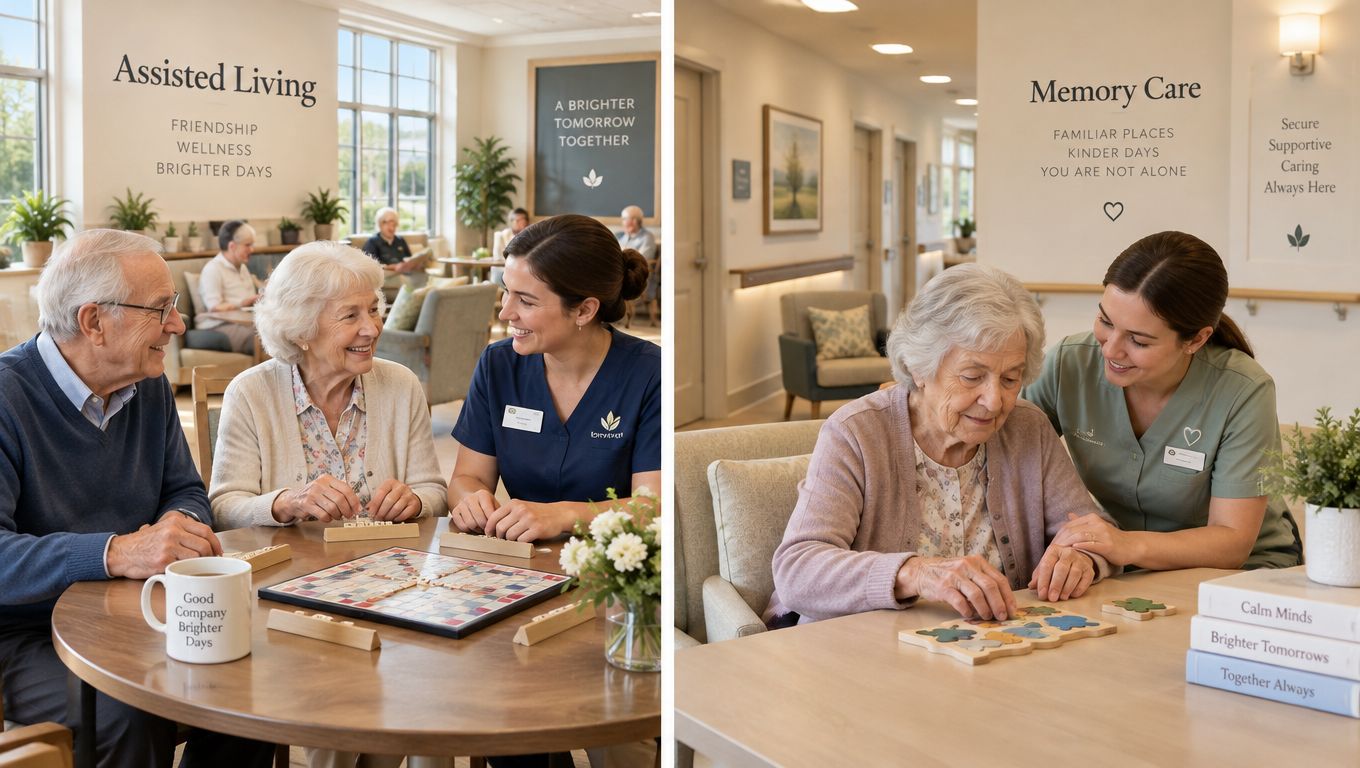
Assisted living can be appropriate for a senior who needs help with daily tasks but can still manage routines with limited supervision. Memory care is designed for people whose cognitive symptoms create risks or support needs that require a more controlled environment and dementia-specific response.
| Feature | Assisted Living | Memory Care |
|---|---|---|
| Environment | May offer open common areas and standard building security | Uses secured areas, monitored exits, and layouts intended to support safe movement |
| Staffing approach | Supports daily living and general supervision | Provides dementia-focused supervision, redirection, and behavioral support |
| Programming | Offers social, recreational, and wellness activities | Uses structured routines and activities adapted to cognitive abilities |
| Medication management | May include reminders or administration, depending on needs | Typically emphasizes closer oversight, documentation, and coordination |
| Cost structure | Often varies with apartment, services, and care level | Reflects specialized security, staffing, programming, and supervision |
The choice shouldn't be driven by the label on the building. Ask what happens when your loved one wanders, refuses medication, wakes repeatedly at night, or becomes upset during bathing. If staff can't safely manage those needs within the assisted living setting, the community may no longer be appropriate.
The escalation indicators
- Wandering: Your loved one attempts to leave or cannot find their way back from familiar areas.
- Medication problems: They take incorrect doses, refuse essential medications, or require direct administration.
- Nighttime disruption: Sleep-related confusion creates repeated safety checks or household exhaustion.
- Behavioral distress: Agitation, suspicion, or resistance requires dementia-specific techniques.
- Caregiver collapse: The family's arrangement depends on unsustainable hours or emergency improvisation.
A practical comparison of care settings can help families distinguish routine assistance from specialized supervision, including the differences outlined in this guide to assisted living and home care. You can also review the distinction between assisted living and memory care before scheduling tours.
Choose the setting that can safely handle the hardest day your loved one is likely to have, not only the easiest day they're having now.
How Memory Care Placement Works
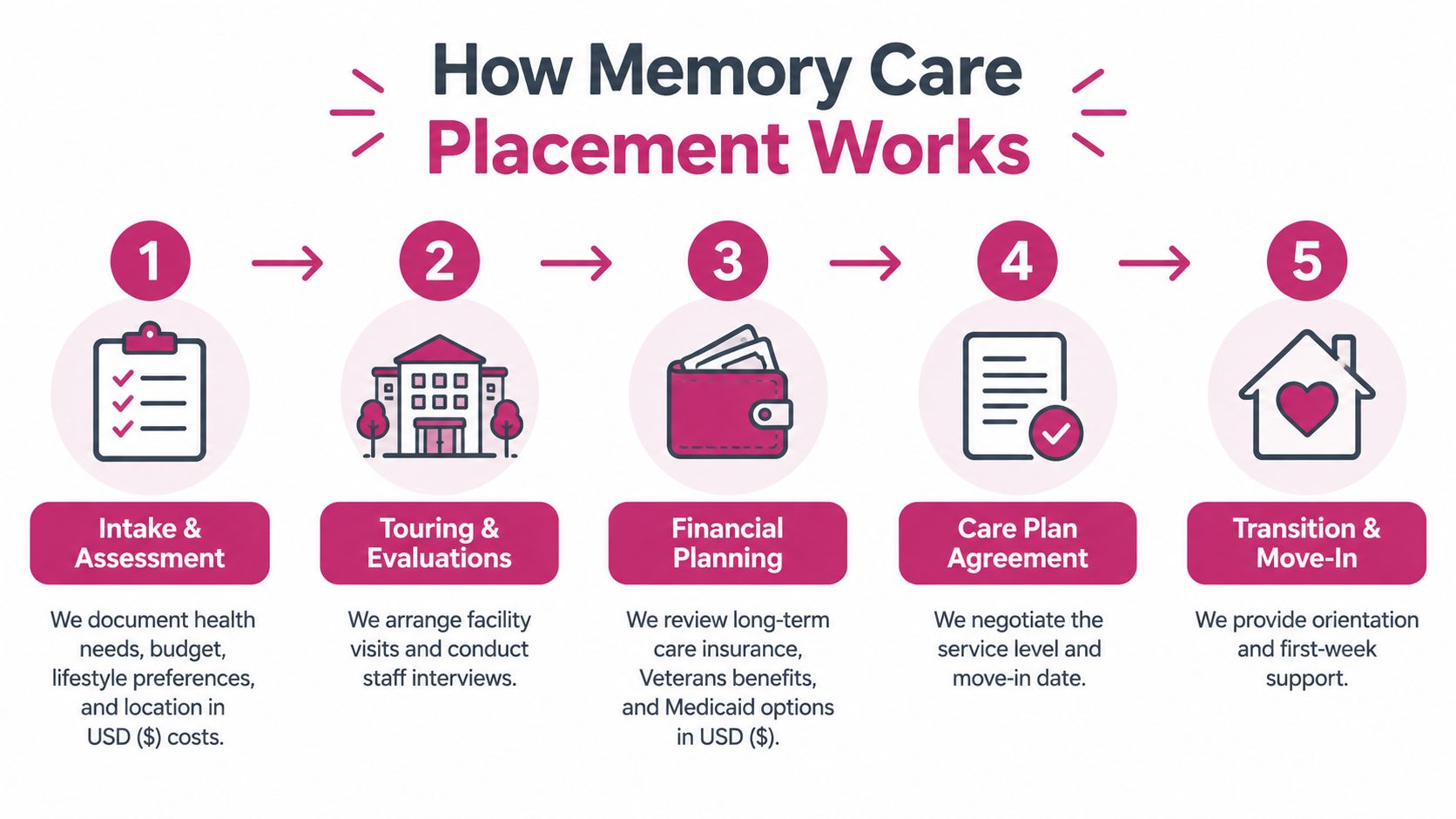
Placement becomes easier when the family stops searching for a “nice facility” and defines the care problem first. A good match must fit cognitive needs, mobility, behavior, location, budget, preferences, and likely progression.
Start with a structured assessment
Write down recent incidents, current diagnoses, medications, mobility limitations, personal-care needs, sleep patterns, food preferences, and behaviors that trigger distress. Include the family's practical limits. A community needs to know whether the placement is planned or urgent, whether a hospital discharge is approaching, and which locations are realistic for regular visits.
Then define the financial boundaries without relying on a single advertised rate. Ask what funds are available, which benefits may apply, and how the family would handle a future increase in care needs.
Tour for evidence, not reassurance
Visit more than one community when circumstances allow. During each tour, observe:
- Resident engagement: Do residents appear involved, comfortable, withdrawn, or unsettled?
- Staff behavior: Do employees knock, explain, wait, and speak respectfully?
- Physical design: Can residents move around without obvious hazards or confusing dead ends?
- Daily rhythm: Are activities happening, and do they look adapted to the people present?
- Communication: Can the representative explain incidents, care changes, and family updates clearly?
Ask to see a sample service agreement and care plan. Request explanations for additional fees, transfer requirements, hospitalization policies, and circumstances that could lead to discharge.
Use local guidance strategically
New Jersey families can use a no-cost placement advisor such as Life Senior Placement to document needs, identify licensed and vetted options, coordinate tours, compare communities, and support the move-in process. The advisor should explain how recommendations were selected and remain clear about any relationship with participating communities.
A placement service doesn't replace your tour or your loved one's clinical assessment. It reduces the time spent sorting through unsuitable options and gives families a consistent point of contact while they compare care, location, availability, and cost.
Cost Realities and Funding Options
The monthly rate is only the beginning of the financial conversation. Memory care pricing varies by location, community design, staffing intensity, apartment type, and the level of assistance required. A lower initial quote can become a poor value if it excludes medication administration, continence support, transportation, supplies, or future care increases.
The scale of dementia care explains why families need a total-cost view. Annual costs of caring for people with Alzheimer's and other dementias, excluding unpaid care, were projected at $384 billion in 2025, while families and friends supplied 19.2 billion hours of unpaid care valued at approximately $413 billion, according to the Alzheimer's Association report. Those figures don't tell you what one community will charge, but they make clear that unpaid labor and hidden household expenses belong in the comparison.
Build a realistic cost worksheet
Ask each community to identify:
- Included services: Room, meals, activities, routine care, medication support, and transportation.
- Variable charges: Care-level increases, incontinence assistance, supplies, escort services, and additional supervision.
- One-time expenses: Assessment, move-in, community, furnishing, or administrative charges.
- Future scenarios: What happens if mobility declines, nighttime support increases, or medical needs become more complex?
Funding may involve private assets, long-term-care insurance, Medicaid programs, Veterans benefits, or a combination. Eligibility and coverage rules vary, so families should verify details with the relevant program, insurer, benefits counselor, or financial professional rather than assuming a benefit will pay the full rate.
The cost guide for memory care can help organize questions before you request proposals. Compare the total service package, not just the room price. In some cases, continuing at home may also involve paid aides, home modifications, respite, overnight coverage, and crisis-driven decisions. “Aging in place” isn't automatically the less expensive path.
Making the Decision with Confidence
A family often knows more than it realizes after a careful tour. You notice whether staff greet residents by name, whether someone responds promptly to a call for help, whether the corridors feel calm, and whether activities reflect the people who live there. Those observations matter because memory care is delivered through hundreds of ordinary interactions, not through the marketing language on a website.
Use this checklist before choosing:
- Safety: Are exits secured, outdoor areas usable, and emergency procedures clear?
- Staff capability: Does training include coaching, competency checks, and coverage across shifts?
- Daily life: Do activities match residents' abilities and personal histories?
- Clinical coordination: Who manages medications, health changes, and communication with physicians?
- Financial clarity: Are included services, added fees, and care-level changes written down?
- Family experience: Can relatives visit comfortably, receive updates, and raise concerns without friction?
A community doesn't need to feel luxurious to be appropriate. It needs to be safe, attentive, honest about its limits, and capable of meeting your loved one's needs as they change. Ask yourself whether the staff's actual behavior supports the promises made during the tour.
Choosing memory care is an act of practical love. It can relieve a family from constant surveillance while giving the person with dementia a structured setting designed for safety, dignity, and meaningful engagement. The right decision won't eliminate every difficult day, but informed placement can prevent avoidable crises and make family visits more focused on connection than crisis management.
Life Senior Placement offers New Jersey families no-cost guidance, needs assessment, curated memory care options, tour coordination, and support through move-in. Visit Life Senior Placement to compare communities and speak with an advisor about a safe, realistic next step.