
The call usually comes from a hospital. Your parent is stable, the discharge planner needs a decision within 48 hours, and you're asked whether home is safe, who can stay overnight, and which rehab or community you'd prefer. Nobody in the family answers with confidence because nobody asked your parent those questions while there was still time to think.
That gap is common. In AARP's 2024 End of Life Survey, 85% of older adults said they were comfortable discussing death and dying, yet only 36% had prepared a last will and testament. Comfort isn't a plan. The right questions to ask elderly loved ones, asked early and in a sensible order, turn vague intentions into notes a sibling or discharge planner can use.
The ten questions below are conversation tools that build on each other, not a topic dump. They start with a daily-routine baseline, then move through activities worth keeping, what home means, who is already helping, worries, day-to-day health, safety, and the kind of care your parent would accept. They close with legacy storytelling and what a good day looks like. Each one has a purpose in the care-planning journey and a concrete follow-up move, because an answer you don't write down won't help on that 48-hour call.
I recommend several short conversations, not one marathon session. If it helps you put your weekly journal in perspective, pick one question a week and note the answer in the same notebook. By the last entry you'll have an intake brief: routines, preferences, and the help your parent would accept.
1. What does a typical day look like for you right now?
Start here because this question carries no threat. You're not asking about moving, dying, or giving up the car. You're asking your parent to walk you through breakfast to bedtime, and that narrative reveals meals skipped, naps that replace activities, and tasks gradually dropped.
The U.S. National Institute on Aging guidance on talking with older patients recommends beginning with open-ended prompts and then using simple-choice or yes/no questions when responses are difficult. That two-stage approach works at the kitchen table too. Let the story run first, then fill gaps about bathing, dressing, toileting, transferring, eating, and medication management.

What to Listen For Beneath the Answer
Say your mother describes toast at nine, television until lunch, and soup from a can at five. Ask what part is easiest and what part takes the most effort. If she admits she skips lunch because standing to cook hurts, you've found a specific problem that meal support or assisted living dining solves, without debating independence in the abstract.
Compare words against the room while you listen. Unopened mail, spoiled food, laundry piling up, or missed appointment cards often contradict a cheerful "I'm fine." Don't turn the first conversation into an inspection. Note discrepancies privately and revisit them under the health and safety questions below.
2. What activities do you enjoy most, and which would you like to keep doing?
Care assessments catalog deficits. This question catalogs reasons to get up in the morning, and that's what separates a placement that merely functions from one your parent will accept. A community can have excellent nursing ratios and still be wrong if its calendar doesn't match the person moving in.
Don't settle for a hobbies checklist. The Commonwealth Fund analysis of loneliness among older people notes that roughly 1 in 20 older adults in the United States reports often feeling isolated. Ask when your parent feels most connected, what contact feels energizing rather than tiring, and what makes joining a group difficult. Lack of confidence or fear of rejection stops more people than lack of interest.

Say a retired teacher lights up describing her reading group and library volunteering. That answer points you toward independent living with an active book club and volunteer program, not a community built around fitness classes she'd never attend. Past interests count too, since a loved activity often works in modified form.
On tours, ask to see the actual activity calendar, not a brochure sample. Observe a session if you can, watch whether residents socialize spontaneously, and check whether staff facilitate one-to-one connection for people who won't join a group. For memory loss, look for familiar music, crafts, and routines instead of novel, fast-paced programming.
3. What matters most to you about where you live?
Families shop by price and availability. Seniors decide by proximity to a daughter, a familiar neighborhood, a private bathroom, a pet, or a faith community. If you don't surface those priorities before touring, you'll present polished options your parent rejects for reasons you never asked about.
Ask for a ranked top three before you look at a single listing. Ranking forces trade-offs into the open. Staying in the same New Jersey town may matter more than a larger apartment twenty minutes away, and it's better to learn that now than after three wasted tours.
Practical rule: If a priority can't be met by an option in front of you, say so out loud and remove that option. Keeping it on the list to be polite wastes everyone's energy.
Say a widowed father wants to stay near his longtime church and the friends who visit after services. That answer narrows the search to home care and independent living within his own town, even if a newer building across the county looks better on paper.
Work through transportation explicitly. Ask how your parent would reach doctors, shopping, worship, and family visits from each location, and who drives if they stop. Resources on planning a move in later life are useful once the destination is chosen, but the ranking conversation comes first. Use location filters in a directory to compare only what's within a manageable distance.
4. Who do you rely on most, and how can we support them too?
A son handles his father's pharmacy runs every Friday. His sister covers the bills. Neither knows the other is already stretched, and neither has a backup for the week one of them gets sick.
Question four asks your parent to name the people behind the routine: who provides rides, meals, medication reminders, nighttime reassurance, and emergency response. Ask your parent first. Then ask each helper separately how sustainable that role feels. The answer from the person doing the work is often more candid than the answer given in front of the family. Ask what would make the role easier: grocery delivery, a rideshare account, a backup sitter, or a paid aide for two mornings a week.
Caregiver arrangements can look stable until a hospitalization exposes the gap. Goodwill without a written plan collapses exactly when more coverage is needed.
Make the Invisible Work Visible
Put every recurring task on a shared calendar with a named owner and a backup. Gaps become obvious fast, especially overnight coverage and weekday appointments. Say a spouse admits, only when asked alone, that she is exhausted and sleeping in fragments. That honesty lets the family arrange in-home companionship and personal care several days a week before she lands in an emergency room herself.
Caregiver burnout is the trigger behind many urgent placements, and it often surfaces as resistance that looks like stubbornness. If your family is handling a situation where a parent agrees in the hospital but refuses at home when downsizing comes up, check whether the underlying issue is an overloaded caregiver with no relief. Respite care or a short-term stay buys rest and doubles as a low-stakes trial of community life.
5. What worries you most about the future?
Ask this plainly and then stop talking. The first answer is often a deflection, so wait through the silence. What follows is usually specific: falling at night, running out of money, losing memory, or becoming a burden.
Social fears deserve the same directness. CDC information on social connectedness risk factors reports that nearly one-quarter of older adults experience social isolation. If loneliness is the worry, ask when it hits hardest and whether your parent wants more contact or dreads enforced socializing. Those are different problems with different fixes.
Acknowledge the fear before solving it. Jumping straight to reassurance tells your parent the topic makes you uncomfortable, and they'll protect you by going quiet. Choose a calm setting, keep your voice matter-of-fact, and avoid assembling the whole family, which makes any conversation feel like an intervention.
Then follow up with one concrete action tied to the named fear. Say your father fears falling on the way to the bathroom at night. Arrange a safety assessment, grab bars, and motion lighting, and shortlist communities with overnight staff for later. Visible follow-through teaches your parent that naming a worry produces help, not a lecture, and the next honest answer comes easier.
6. How are you managing your health and medications day to day?
The answer "I take everything on time" is a starting point, not a finding. Ask to see the medication list, the pill organizer, and recent doctor's notes, then compare them side by side. Duplicates, expired bottles, and a full Friday organizer tell you more than a confident summary. If your parent handles this independently, ask who fills the organizer and what happens after a dose change. That handoff is where details get lost.
Adjust how you ask when answers come slowly. The Gerontological Society of America guide to communicating with older adults recommends closed-ended choice or yes/no questions when a specific answer is required or dementia limits processing, and warns against framing questions as tests. Ask one thing at a time, offer two concrete options, and allow extra response time.
Use three probes to get past general reassurance:
- Medications: Who fills the organizer, and what happens after a dose change?
- Mobility and senses: Any recent falls, hearing loss, or vision changes affecting reading labels?
- Services needed: Does your parent need medication administration, wound care, therapy, or dementia support?
If you're sorting this out from a distance, practical guidance on helping a visiting parent manage multiple medications covers the organizer check and pharmacy coordination in detail. When you prepare for the next doctor visit, practical strategies for long-term condition management can help you turn the medication list into specific questions rather than a vague update.
Suppose your mother admits she skips her blood pressure medication when it makes her dizzy. That is a prescriber conversation first, then a placement filter. Share the updated list with any advisor so matches reflect current clinical needs, not last year's. Aim for a reliable medication picture you can hand to a doctor, a home care agency, or a community's care team.
7. What would make your home feel safer and more comfortable?
Frame this as improvement, not departure. Your parent gets to point at the dark hallway, the tub wall, the icy steps, and the yard work without conceding that home has failed. Their list tells you whether aging in place is a renovation project or a losing battle.
Walk through the home together, room by room, and write down problem areas as you go. Bathrooms, stairs, entryways, and laundry locations cause most of the trouble. Ask whether a home safety evaluation by an occupational therapist is available through their physician or a home health agency, since a professional eye catches risks families have stopped seeing.
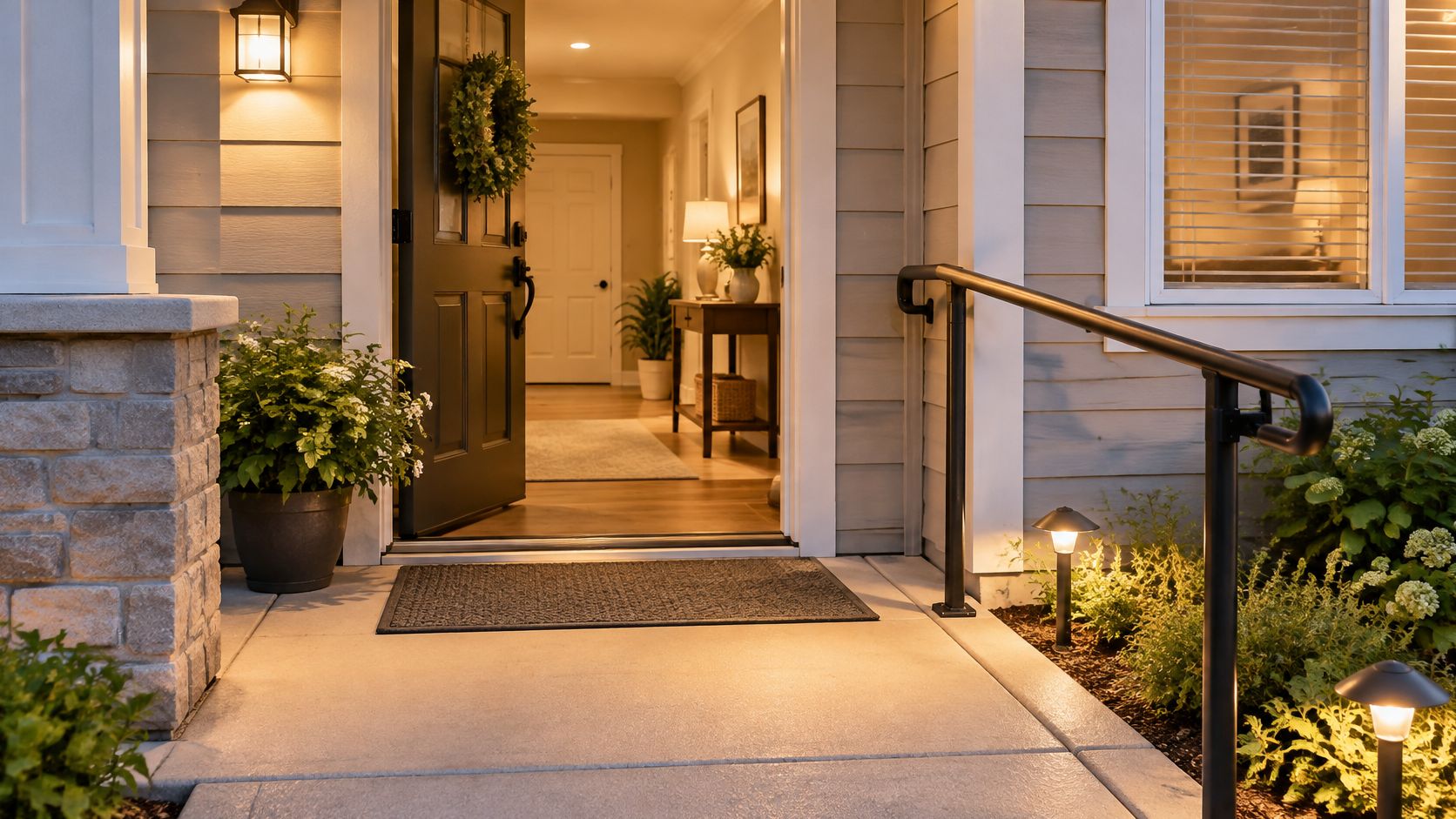
Say your mother struggles climbing into the tub but manages everything else well. A walk-in shower, grab bars, and part-time caregiver support may keep her home safely and buy real time. That's a legitimate outcome of this question, not a delay tactic, provided the remaining risks are small.
Price the whole package before deciding. Add modifications, home care hours, and maintenance together and compare that monthly figure with assisted living. Families often discover the gap is smaller than assumed, which reframes the move as a value choice rather than a surrender.
8. If you ever needed more help, what kind of care would you want, and from whom?
Ask this while it's still hypothetical. Scenario questions work best: who can speak for you if you cannot, what should happen after a hospitalization, and what would make home care no longer safe? Abstract questions about "someday" produce abstract answers nobody can execute.
Preferences here are real but not always complete. According to NORC at the University of Chicago findings reported by McKnight's Senior Living, 52% of older adults said they would prefer help with activities of daily living from family or friends at home, while 21% preferred paid caregivers at home. Honor the preference, then test it against the hours your family can sustain.
A preference stated early is a compass, not a contract. It tells you which direction to look first when circumstances change.
Say your mother insists she never wants a nursing home. Recorded early, that wish steers you toward assisted living with home health support later, which respects her position without pretending home alone was still viable. Understanding the difference between home care and home health care helps you describe those options accurately instead of using the terms interchangeably.
Ask directly about a health care proxy and advance directive, locate the documents, and keep copies accessible to whoever would get the hospital call. Share the stated preferences with discharge planners if a medical event occurs. Revisit this question after every hospitalization or functional decline, because answers change with health.
9. What memories or life stories would you like your family to remember?
After eight practical questions, this one restores balance. Your parent isn't only a care plan. Asking about formative work, family history, hard decisions, and proud moments signals that you see a whole person, and it produces material caregivers can use.
Don't interrogate. Use photos, music, or objects to open stories, and change familiar questions to reach perspective instead of facts. "Were you scared when you moved?" gets more than "Tell me about the move." If memory loss is present, treat the conversation as time together rather than a test, and move on when a prompt doesn't land.

Oral history projects such as StoryCorps have shown how recorded stories preserve family history and connect generations. You don't need that scale. Record on a phone with permission, label the files, and store them in a safe family archive more than one person can access.
Turn the highlights into a one-page life story profile for new caregivers or community staff. Include preferred name, career, faith, music, routines, and topics that comfort or distress. Staff who know your father ran a bakery will greet him differently at 6 a.m., and that recognition supports identity and communication when memory falters.
10. What does a good day look like for you?
End where daily life happens. Answers are usually small and precise: sleeping until eight, coffee with a neighbor, the crossword, grandchildren on Sundays, quiet after lunch, a favorite program at night. Small isn't trivial. These details are the difference between a tolerable placement and a place your parent settles into.
Ask for a recent good day in detail rather than an ideal one. A real day reveals pacing, energy limits, and social appetite that a wish list hides. Someone whose good day holds one outing and a long rest won't thrive in a community that measures success by packed calendars.
Say your mother describes jazz on the radio, an hour in the garden, and an unhurried lunch. That points you to a community with a music program and an accessible outdoor garden, and it gives you exact questions for staff. How are mornings paced? Can residents eat slowly? Is the garden usable with a walker?
Bring these preferences on every tour and ask staff how they'd support them specifically. Vague answers predict vague support. Update this answer over time, since what feels good shifts with health and mobility, and share changes with caregivers so the plan tracks the person.
10 Questions to Ask Elderly Loved Ones at a Glance
| Question | Focus Area | What It Reveals | Best Used When |
|---|---|---|---|
| What does a typical day look like for you right now? | Daily routine and independence | Routines, challenges, and tasks that may need support | Starting a low-pressure conversation about care needs |
| What activities do you enjoy most, and which would you like to keep doing? | Interests and quality of life | Favorite activities, social preferences, and opportunities for adaptation | Comparing communities or planning care that preserves enjoyment |
| What matters most to you about where you live? | Housing priorities | Important preferences such as location, privacy, familiarity, or community | Narrowing living options and planning a possible move |
| Who do you rely on most, and how can we support them too? | Social network and caregiving | Sources of support, care gaps, and possible caregiver strain | Coordinating family responsibilities or considering respite and professional care |
| What worries you most about the future? | Fears and future concerns | Concerns about health, safety, finances, memory, or independence | Building trust and addressing concerns before a transition |
| How are you managing your health and medications day to day? | Health and medication management | Medication routines, health changes, and need for clinical support | Assessing care needs or planning a safer living arrangement |
| What would make your home feel safer and more comfortable? | Home safety and accessibility | Hazards, accessibility needs, and potential home modifications | Deciding whether aging in place is practical |
| If you ever needed more help, what kind of care would you want, and from whom? | Future care preferences | Preferred care setting, trusted decision-makers, and personal needs | Planning ahead before a health crisis |
| What memories or life stories would you like your family to remember? | Personal history and legacy | Values, meaningful relationships, and stories that can inform personalized care | Strengthening family connection or sharing background with caregivers |
| What does a good day look like for you? | Well-being and daily preferences | Sources of joy, comfort, and purpose | Choosing care that supports happiness as well as safety |
From Answers to Action Turning the Conversation Into a Care Plan
Ten conversations only help if they survive contact with a real decision. Within a week of finishing, convert your notes into a one or two page intake brief and share it with siblings and anyone named as a decision maker. Disagreements about facts are easier to settle now than disagreements about memories during a crisis.
Structure the brief around the domains you covered: daily routine, bathing, dressing, toileting, transferring, eating, medication management, cognition, wandering risk, caregiver availability, preferred location, and budget. Mark clearly which entries are your parent's stated preferences and which are observed or clinically verified needs. That distinction matters because the two diverge, and pretending they don't produces mismatches that surface after move-in.
Rank, Then Match
Rank the priorities from questions three and eight at the top. Everything else becomes a scored comparison across the full continuum of care, meaning independent living, assisted living, memory care, nursing home, and home care. On tours, we look at staffing, dining, activity levels, and what care is included, and we review state survey reports, physical safety standards, and operational histories before recommending nearby residences.
Life Senior Placement provides free, objective guidance to help New Jersey families evaluate local options and choose care settings across that continuum. Families can call (862) 398-2006 for guidance on local assisted living and home care services, and get help matching their answers to verified local options at no cost. Bring your brief to that call and the shortlist gets accurate faster, because the advisor starts from your parent's words rather than a cold intake form.
Keep the Brief Alive
Reopen the document after every hospitalization, fall, medication change, or caregiver change. Update the answers that moved and note the date, so the family can see the trajectory rather than arguing from snapshots. Preferences recorded a year ago still guide direction, but current function decides level of care.
Don't wait for perfect wording or a calm holiday that never arrives. One honest question at the kitchen table this week beats a flawless family meeting scheduled for someday. Your parent gets heard while they can still shape the outcome, and you get a plan built on their answers instead of your guesses.
The best time to ask these questions is before they become urgent, while the answers can still change what happens next.
Bring your answers to Life Senior Placement and we'll turn them into a verified shortlist of New Jersey communities and home care options matched to your parent's needs, location, and budget. Our guidance is free to families, and we'll help you compare care levels, schedule tours, and ask the hard questions on your behalf.