Independent Living vs Assisted Living in New Jersey
Choosing between independent living and assisted living in NJ comes down to how much physical support your parent needs each day. Independent living offers a maintenance-free lifestyle built around active socialization, while assisted living provides licensed, hands-on personal care, medication supervision, and 24-hour staff oversight.
When you notice an aging parent skipping meals, missing medications, or letting household maintenance slip, you start looking for answers. But the terms can get confusing fast. Both models provide dining, social calendars, and secure settings. The true dividing line is personal care.
Understanding the differences between independent living and assisted living in New Jersey helps you protect your parent's safety, preserve their dignity, and avoid paying for unnecessary services before they are needed.
What Is Independent Living?
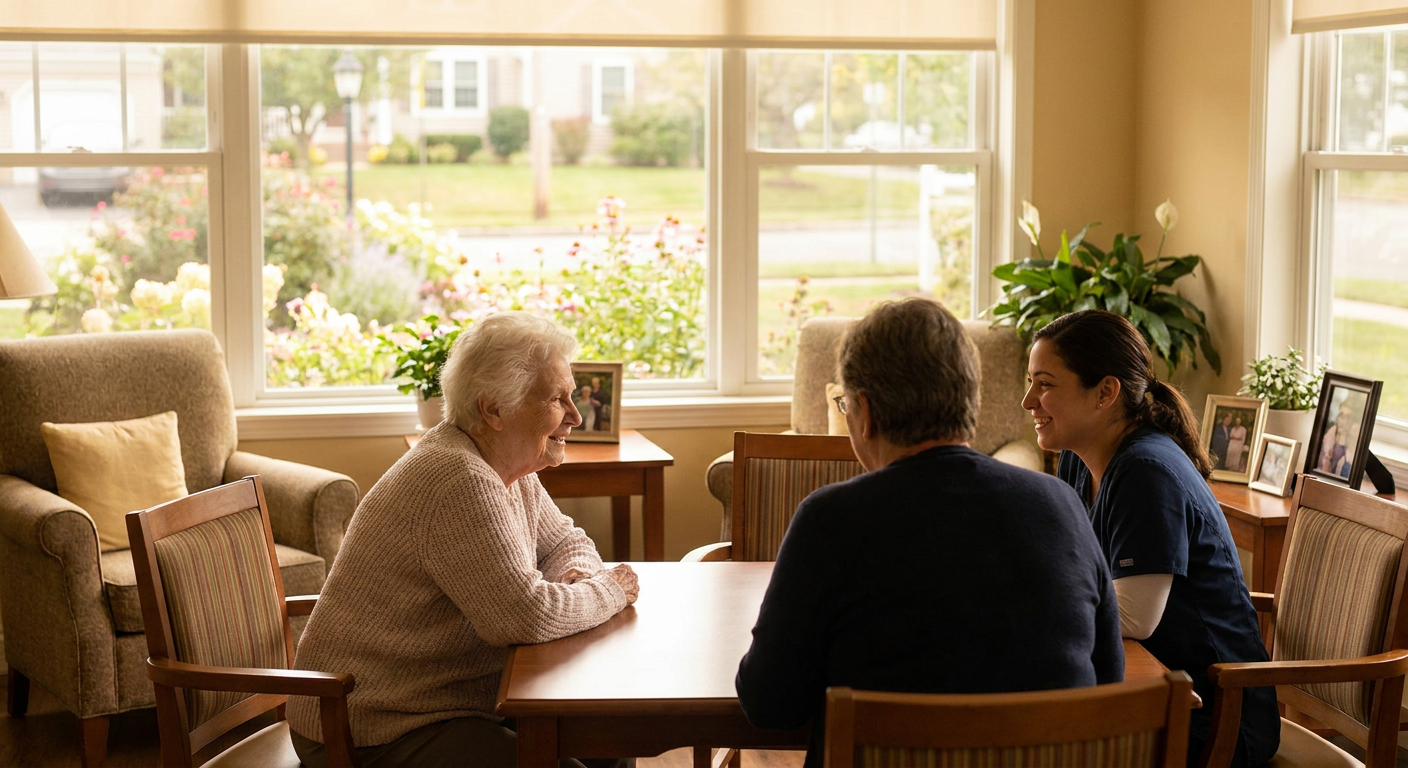
Independent living is designed for older adults who can manage their personal hygiene, dressing, and medications without staff support. Think of it as a residential community built for convenience and connection. Residents live in private rental apartments, townhomes, or cottages.
In New Jersey, these settings are typically hospitality-driven rather than clinical. Monthly rent generally covers:
- Full kitchens or kitchenettes in private units
- One or more daily meals served in a restaurant-style dining hall
- Interior and exterior maintenance, landscaping, and snow removal
- Weekly light housekeeping and linen laundry services
- Scheduled transportation to local grocery stores, shopping centers, and doctors
- Organized fitness classes, lectures, book clubs, and group outings
Residents in independent living come and go freely. They drive their own cars or take community shuttles. Because no clinical care is included, staff does not check in daily to help with morning routines or give medication reminders. If a resident in independent living begins needing minor physical assistance, the family must bring in a private aide for your parents or coordinate outside help.
What Is Assisted Living in NJ?
Assisted living bridges the gap between staying at home and skilled nursing. Under state rules overseen by the New Jersey Department of Health, licensed assisted living residences provide housing, dining, and individualized assistance with daily activities.
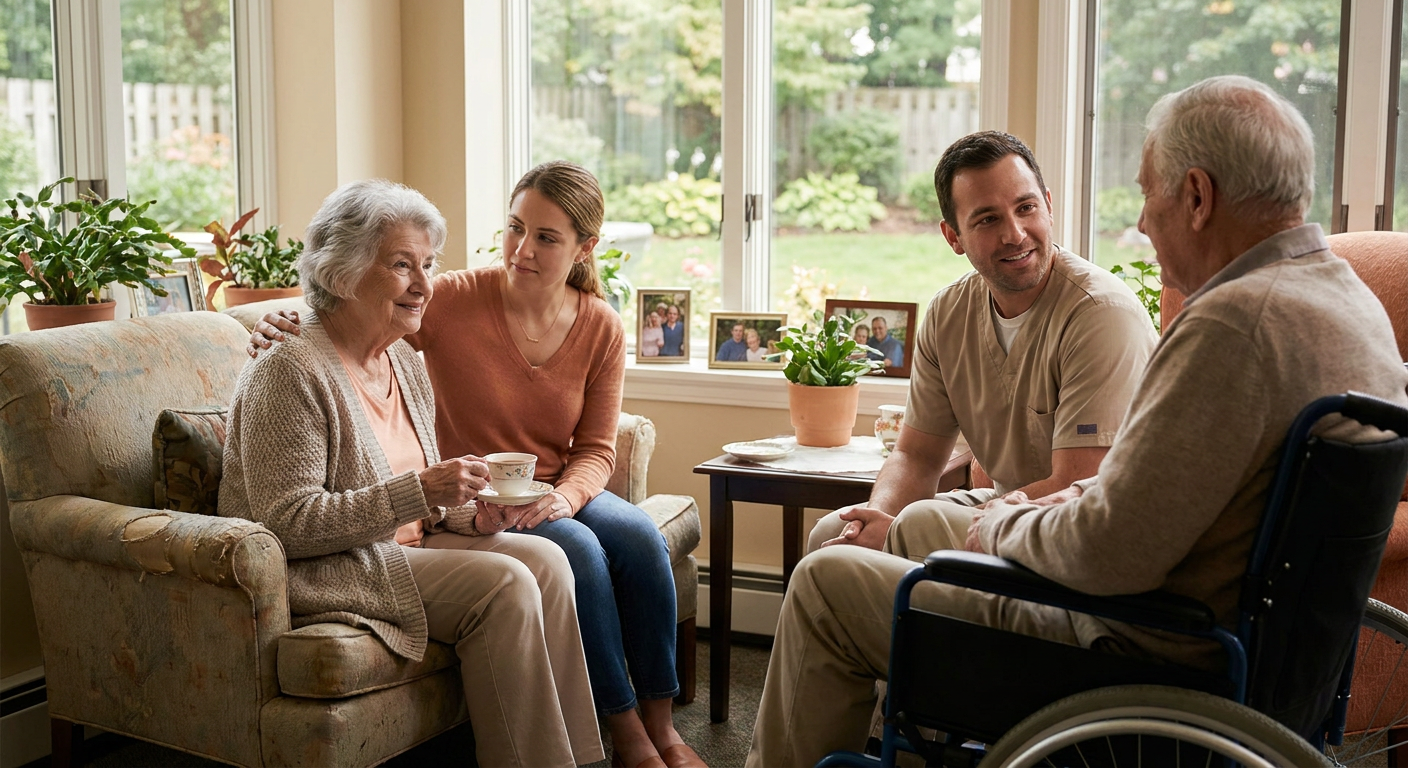
What is assisted living from a practical standpoint? It is a setting where a parent maintains a private apartment while trained staff handles tasks that have become unsafe to manage alone.
Key services include:
- Activities of daily living (ADLs): Hands-on help with showering, getting dressed, grooming, toileting, and walking.
- Medication administration: State-certified aides or licensed nurses manage prescriptions, track refills, and hand medications directly to the resident.
- On-site nursing: Registered nurses conduct periodic wellness assessments and supervise the care team.
- 24-hour emergency support: Pull cords and wearable emergency pendants connect residents to staff around the clock.
- Coordinated medical care: Visiting clinicians, such as physical therapists or podiatrists, often treat residents on site.
While independent living prioritizes freedom from chores, nj assisted living focuses on ongoing physical wellness and safety.
Key Differences: Services, Care, and Licensing
The operational and legal differences between these two senior living models determine what kind of support your family will receive.
| Feature | Independent Living | Assisted Living |
|---|---|---|
| Primary Focus | Hospitality and social engagement | Personal care and wellness |
| State Licensing | Unlicensed residential housing | Licensed by NJ Department of Health |
| Care Staff | No certified caregivers on staff | 24/7 certified personal care staff |
| Nursing Oversight | None provided | RN on site or on call 24/7 |
| Help with Dressing & Bathing | Not included | Included based on care plan |
| Medication Handling | Self-managed only | Administered and monitored by staff |
| Dining | Optional or 1 to 2 meals daily | 3 balanced meals daily plus snacks |
Comparing the Costs in New Jersey
New Jersey carries some of the highest senior care costs in the country. Understanding how each model bills helps prevent surprise rate increases.
Independent living operates like standard residential leasing. Residents pay a monthly rent based on apartment size and floor plan. The rate includes utilities, maintenance, and selected meal plans. In New Jersey, monthly independent living fees often range from $2,500 to $5,500, depending on the county and amenities.
Assisted living pricing has two distinct parts: the base rent (room, board, meals, housekeeping) plus a care level fee. Communities assess your parent before move-in to calculate how many hours of physical assistance they need each day. As your parent's care needs increase, the monthly care fee rises. A baseline assisted living in New Jersey rate often starts around $6,000 to $7,000 per month, with high-acuity care climbing past $9,000 or $10,000 monthly in northern counties.
Neither Medicare nor standard health insurance pays for the room and board portion of independent or assisted living. According to the federal rules outlined on Medicaid.gov, New Jersey does offer assistance for qualifying low-income seniors through the Managed Long Term Services and Supports (MLTSS) program, but most families begin as private payers. If long-term planning is on your radar, check out our guide on what NJ Medicaid actually covers.
Signs Your Parent Needs Assisted Living Instead of Independent Living
Families frequently place a parent in independent living hoping they can simply hire a little extra help. But when needs multiply, an independent environment quickly becomes unsafe.
Look for these clear indicators that your parent requires an assisted living level of care:
- Medication mistakes: You find unopened pill organizers, expired bottles, or doses taken at the wrong time of day.
- Mobility problems: Frequent near-falls, balance instability, or an inability to step into a bathtub safely.
- Poor personal hygiene: Wearing the same clothes for days, body odor, or resistance to bathing because stepping into the shower feels scary.
- Unintentional weight loss: An empty refrigerator, spoiled food, or a parent who lacks the stamina to prepare simple meals.
- Caregiver exhaustion: You or your siblings are spending every weekend managing doctor visits, cleaning the house, and worrying about middle-of-the-night calls. The National Institute on Aging points out that prolonged caregiver strain often harms the adult child's physical and mental health.
If your parent is experiencing cognitive changes, wandering, or severe confusion, standard assisted living may not be secure enough. In those situations, exploring memory care communities is often the safest path forward.
Making the Transition Smoothly
Moving away from a long-time family home is an emotional hurdle. Many parents push back against the idea because they mistake assisted living for a hospital or a nursing home.
Be upfront and gentle. Emphasize that assisted living lets them keep their own private space without the burden of running a household. For tips on managing the move itself, review our advice on helping a parent adjust during month 1. If sorting through a lifetime of belongings feels paralyzing, our guide on downsizing a parent's home in New Jersey offers a step-by-step checklist.
Frequently Asked Questions
Can you hire private aides in independent living instead of moving to assisted living?
Yes, you can hire private certified home health aides to assist your parent in an independent living apartment. However, if your parent needs multiple hours of hands-on help morning and night, paying an hourly rate for private aides alongside independent living rent is usually far more expensive than moving into assisted living.
What happens if my parent's health declines while in assisted living?
Assisted living communities employ registered nurses who reassess residents periodically. If your parent needs more physical support, the community simply increases their care tier and adjusts their service plan. If clinical needs eventually become complex or terminal, families can layer in specialized hospice care services directly within the assisted living apartment.
Can married couples with different care needs share an apartment?
Yes. Many communities allow couples to live together in an assisted living apartment where one spouse receives comprehensive physical care while the more independent spouse receives only basic room and dining services.
Find the Right Community for Your Family
Navigating senior living options across New Jersey can feel overwhelming when you are trying to make the right choice under stress. You do not have to tour dozens of buildings alone.
Call Life Senior Placement at (862) 398-2006 or send us a short message online. Our local advisors will review your family's budget, medical requirements, and preferred location to help you shortlist the right communities at absolutely no cost.